
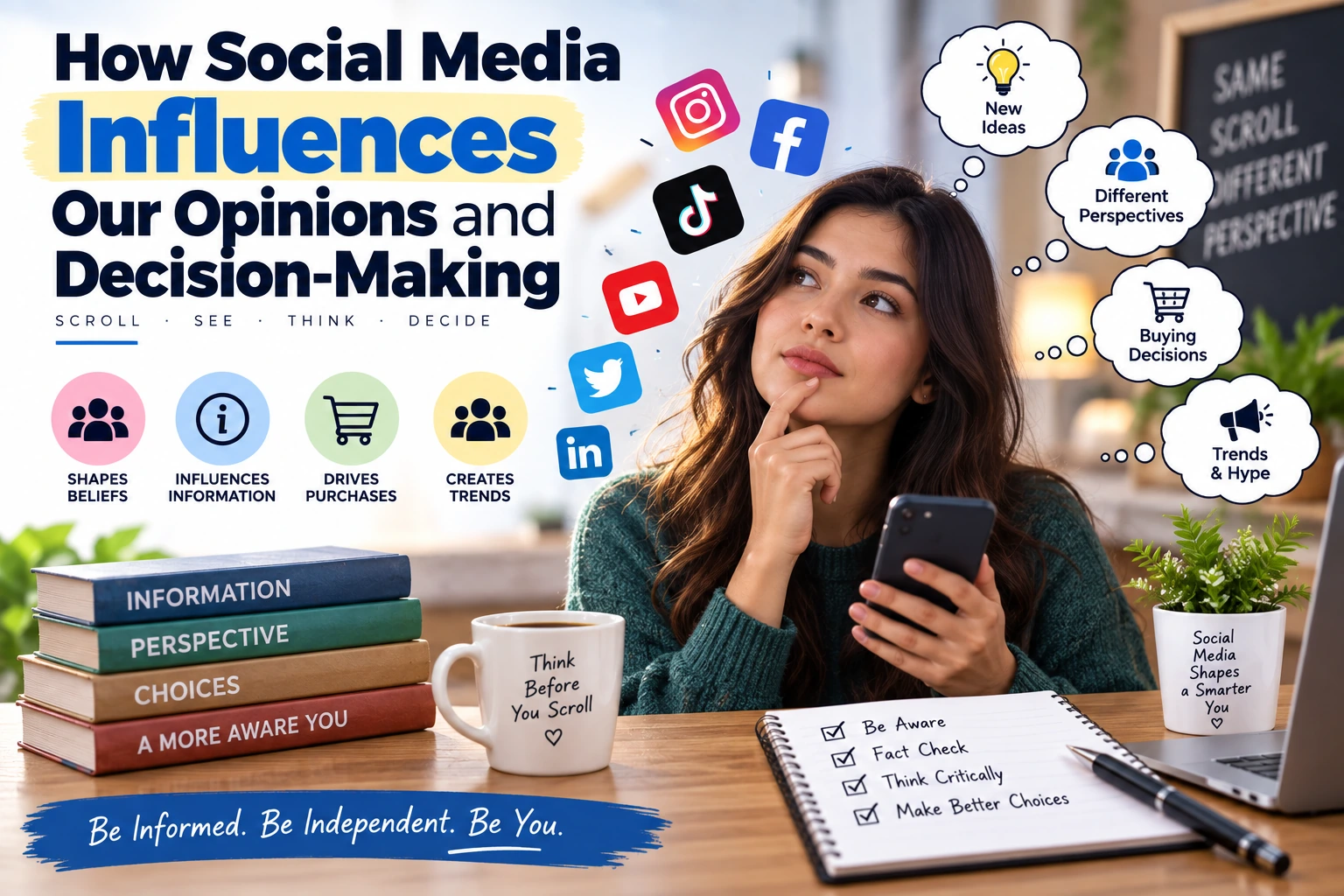
Social media has become an important part of everyday life. People use platforms to communicate, follow news, discover products, watch entertainment, and share personal experiences. Because users encounter a constant stream of information, social media can influence how they think about different subjects and the choices they make. While it can provide useful perspectives, it can also shape opinions in subtle ways.
The Power of Constant Information
One of the biggest ways social media affects decision-making is through the amount of information people see every day. A person may encounter dozens or even hundreds of posts, videos, headlines, reviews, and opinions within a short period.
Repeated exposure can make certain ideas feel familiar and convincing. Even when people do not actively search for information about a particular topic, their social media feeds may introduce them to it. This can influence what they consider important and how they understand an issue.
Algorithms Shape What People See
Social media platforms use algorithms to personalize users’ feeds. These systems consider factors such as previous interactions, viewing habits, searches, and content engagement.
Personalization can make social media more interesting, but it can also limit the range of perspectives a person regularly encounters. If someone frequently interacts with a particular type of content, similar material may appear more often.
As a result, users may gradually spend more time around opinions that are consistent with their existing beliefs.
Social Proof Influences Choices
People often look at the behavior of others when making decisions. Social media makes this process particularly visible.
Likes, comments, shares, ratings, testimonials, and follower counts can create a sense that something is popular or trustworthy. For example, a product with thousands of positive comments may appear more appealing than an unfamiliar alternative.
However, popularity does not always mean quality. People should consider whether reviews are genuine, relevant, and based on actual experiences before making important decisions.
Influencers and Online Personalities
Influencers can have a strong effect on consumer behavior and personal preferences. Followers may develop trust in creators they watch regularly and become interested in products, services, destinations, or lifestyles they recommend.
Influencer marketing works partly because recommendations can feel more personal than traditional advertisements. However, audiences should remember that promotional content may involve sponsorships or commercial relationships.
Looking beyond an influencer’s recommendation and researching a product independently can lead to more informed decisions.
Emotional Content Can Be Powerful
Content that creates strong emotions often attracts attention. Posts that generate excitement, anger, fear, surprise, or amusement may receive significant engagement.
Emotional reactions can sometimes influence decision-making before people have time to examine the facts. A dramatic headline or short video may encourage an immediate opinion even when the full context is more complicated.
Taking a moment to pause and verify information can help prevent emotional reactions from becoming permanent beliefs.
Social Media and Political Opinions
Social media has changed how people discover and discuss political and social issues. Users can access opinions from individuals and organizations around the world, participate in discussions, and share information quickly.
This can increase awareness and encourage civic participation. At the same time, misinformation, selective reporting, edited videos, and highly partisan content can create confusion.
Comparing information from multiple reliable sources is especially important when forming opinions about significant public issues.
The Role of Confirmation Bias
People naturally tend to notice information that supports what they already believe. Social media can strengthen this tendency because users often follow people and pages that share similar views.
This can create an environment where opposing opinions seem less common than they actually are. Deliberately exploring credible perspectives that differ from your own can encourage more balanced thinking.
How to Make Better Decisions Online
Social media does not have to be avoided to make thoughtful decisions. Instead, users can develop better digital habits.
Before accepting a claim, check its original source. Look for supporting evidence rather than relying only on comments or viral posts. When researching products or services, compare several independent sources.
It is also useful to distinguish between facts, opinions, advertisements, and personal experiences. These types of information can appear together in the same feed but should not be treated as equally reliable.
Taking a Break Can Help
Constant exposure to online content can make it difficult to step away and think independently. Regular digital breaks can provide an opportunity to reflect without the influence of a continuous stream of opinions.
Even a short period away from social media can help people reconsider whether a decision reflects their own needs or simply the influence of online trends.
Conclusion
Social media can influence opinions and decisions through algorithms, social proof, influencers, emotional content, and repeated exposure to particular viewpoints. Its impact is not necessarily negative; social platforms can provide valuable information, encourage discussion, and introduce people to new ideas.
The key is to use social media thoughtfully. Questioning claims, checking sources, considering different perspectives, and allowing time for reflection can help people remain informed without allowing online content to completely determine what they believe or choose.